
Get SHE’S Daily Newsletter | Subscribe Here

10 Preschool Pumpkin Crafts Little Hands Will Love This Fall
Disclaimer. Some images featured in this article may originate from third-party sources and are used for illustrative purposes. Please review our Image Credits Policy for attribution information.
Published on September 15, 2026
Posted by
Lena
 Verified by Caroline West
Caroline West
Editor in Chief, She Magazine
Caroline oversees every piece of content published on She Magazine, ensuring it meets our editorial standards for accuracy, tone and quality before it goes live.
Our Editorial Standards
Leave a comment
Verified by Caroline West
Caroline West
Editor in Chief, She Magazine
Caroline oversees every piece of content published on She Magazine, ensuring it meets our editorial standards for accuracy, tone and quality before it goes live.
Our Editorial Standards
Leave a comment
 Verified by Caroline West
 Caroline West
Editor in Chief, She Magazine
Caroline oversees every piece of content published on She Magazine, ensuring it meets our editorial standards for accuracy, tone and quality before it goes live.
Our Editorial Standards
Leave a comment
Caroline West
Editor in Chief, She Magazine
Caroline oversees every piece of content published on She Magazine, ensuring it meets our editorial standards for accuracy, tone and quality before it goes live.
Our Editorial Standards
Leave a comment
I am sitting on the kitchen floor with a tiny pumpkin in my lap and my three year old niece insisting it needs eyebrows, and suddenly preschool pumpkin crafts feel like the most important thing on my list today. The table above us is covered in newspaper, the glue stick has lost its cap, and nobody here cares one bit.
She is already sorting orange paper scraps into piles that only make sense to her. She holds each one up to the window like she is choosing fabric for a ball gown, and I am trying very hard not to laugh.
This is the part of fall I wait for all year. The pumpkins on the porch are for show, but the ones we make at this table end up on the fridge until spring.
Little hands do not need perfect. They need something to squeeze, stick, press, and name, and a finished pumpkin they can point to and say I made that.
In this article
What to Know Before Starting Preschool Pumpkin Crafts
A little prep makes preschool pumpkin crafts feel fun for everyone, including the grown up doing the cleanup. Keep these simple things in mind before you open the glue.
- Keep each session to about 15 or 20 minutes, since most preschoolers lose focus after that.
- Glue sticks and washable tempera paint are the easiest supplies for small hands to control.
- Watch closely around googly eyes, dry pasta, and seeds, because they are choking hazards for young children.
- Cover the table with kraft paper or an old shower curtain so cleanup takes two minutes.
- Do any cutting ahead of time so the fun part starts right away.
- Let your child make the choices, even when the pumpkin ends up purple.
Pumpkin Name Puzzles That Teach Little Ones Their Letters

Photo: @moffattgirls from Instagram
A child’s own name is the first word most preschoolers want to read, which makes it the perfect starting point for early literacy. Matching loose seed letters to a printed name builds letter recognition and left to right order without ever feeling like a lesson.
Laminate the pumpkin and the seeds so they survive weeks of use, then store each child’s set in its own zip bag. Start with the letters lined up in order for younger kids, and mix them up once they feel confident.
A printable set from a teacher shop usually costs $3 to $6, and cardstock plus a home laminator keeps a whole class set under $15. If you skip laminating, regular printer paper is fine for a quick one time activity.
Paper Mosaic Pumpkins and Acorn Friends

Photo: @simplycraftykids from Instagram
Mosaics suit this age because every paper square is a small, complete decision, and a child can stop at any point and still have something that looks like a pumpkin. Pinching, peeling, and pressing each piece is also steady practice for fine motor skills.
Draw a thick black outline first so kids have a clear edge to fill, and cut the squares ahead so their energy goes into gluing. Making a pumpkin, a leaf, and an acorn as a trio keeps this one of those preschool pumpkin crafts that stretches into a full fall morning.
Construction paper, a glue stick, and a pack of googly eyes come to around $8 at a dollar store or craft aisle. One pack of paper covers a full classroom with plenty left over for another day.
No Carve Preschool Pumpkin Crafts With Glitter and Googly Eyes
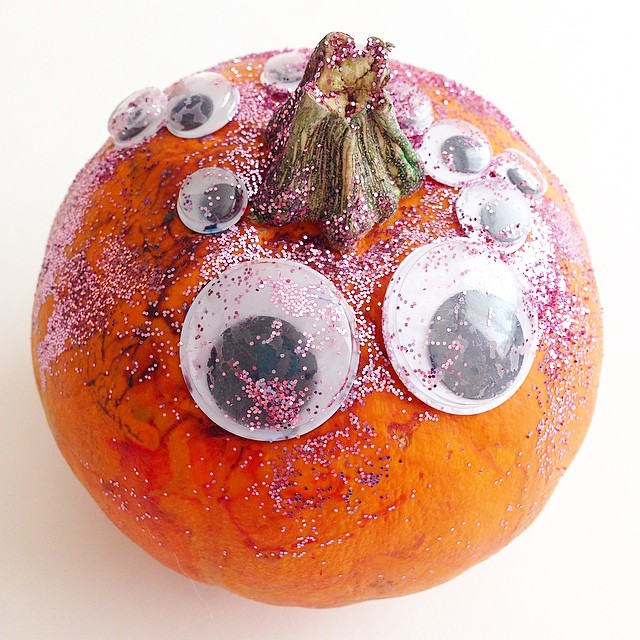
Photo: @margauxmakes from Instagram
Skipping the carving means no knives, which makes a real pumpkin safe for even the youngest crafters. A mix of big and tiny eyes turns a plain gourd into a friendly monster, and kids love counting how many they managed to squeeze on.
Brush a thin layer of craft glue over the top, let your child shake on glitter, and press the eyes on while the glue is still tacky. Once everything dries, a coat of clear sealer keeps the sparkle from ending up all over your couch.
Mini pumpkins run about $1 to $2 each at grocery stores in October, and a big bag of self adhesive eyes is around $5. Glitter glue costs a little more than loose glitter, but it saves a lot of sweeping.
Yarn Wrapped Pumpkins on Punched Plates

Photo: @veggiebudsclub from Instagram
Threading yarn through holes is a quiet, repeating motion that calms busy preschoolers while building hand strength and focus. There is no wrong pattern, so every pumpkin ends up with its own crisscross design.
Punch holes around a sturdy plate and wrap tape around the yarn end to make a stiff, easy needle. Tuck a twig from the yard into the top and twist a green pipe cleaner around it for a curly vine.
A skein of orange yarn costs about $3 to $4 and makes a dozen pumpkins. Plates and pipe cleaners are often already in the craft bin, and the twig stems are free on your next walk.
Fork Painted Jack O Lanterns With Wild Texture
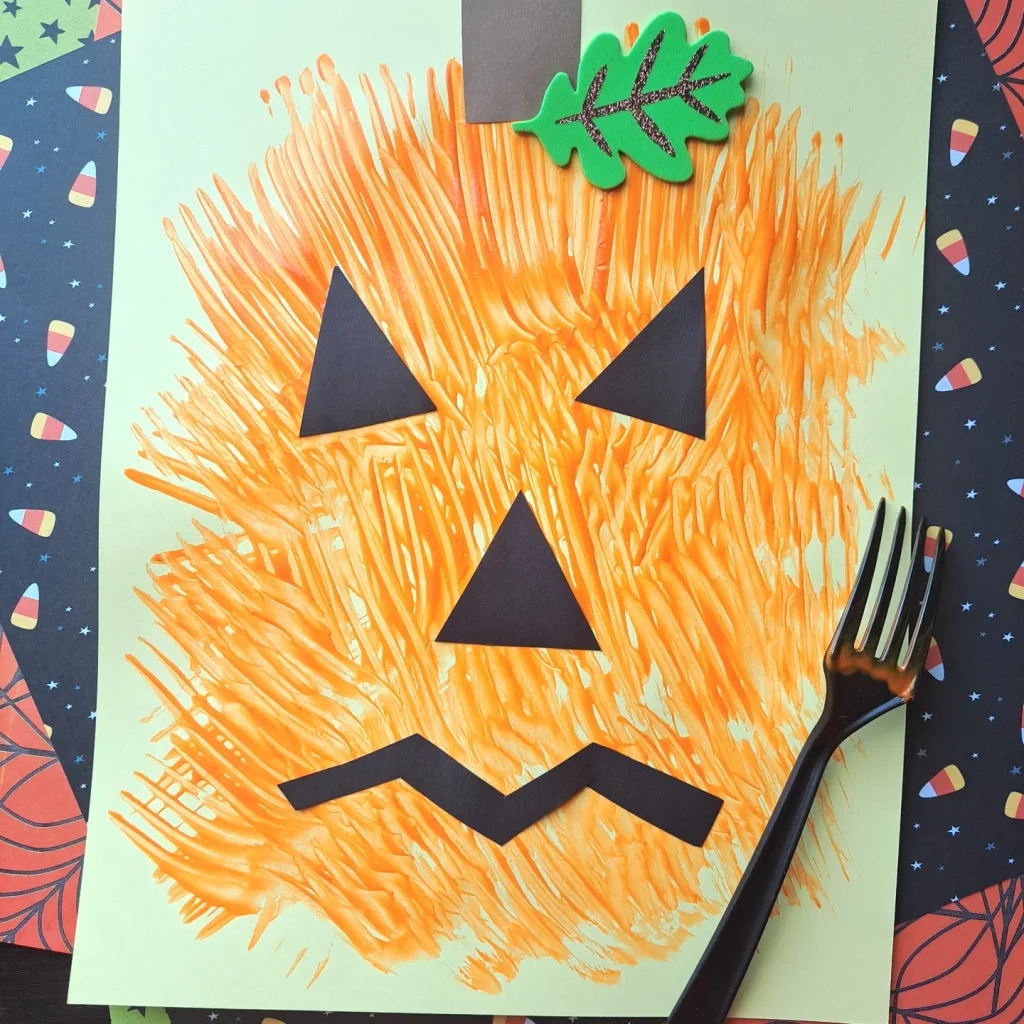
Photo: @gluedtomycrafts from Instagram
A plastic fork drags paint into dozens of thin lines at once, so even a quick swipe creates texture that looks like real pumpkin ridges. Among all preschool pumpkin crafts, this is the one where a messy result looks best, which takes the pressure off completely.
Squeeze a blob of orange tempera in the middle of the page and let your child drag it outward in every direction. It is a lovely bit of process art, and black paper triangles for the face can go on once the paint dries.
The fork costs pennies, and a bottle of washable tempera runs about $4. A pack of foam leaf stickers for the top is usually $2 to $3.
The Ghost Ate Snack Writing Craft
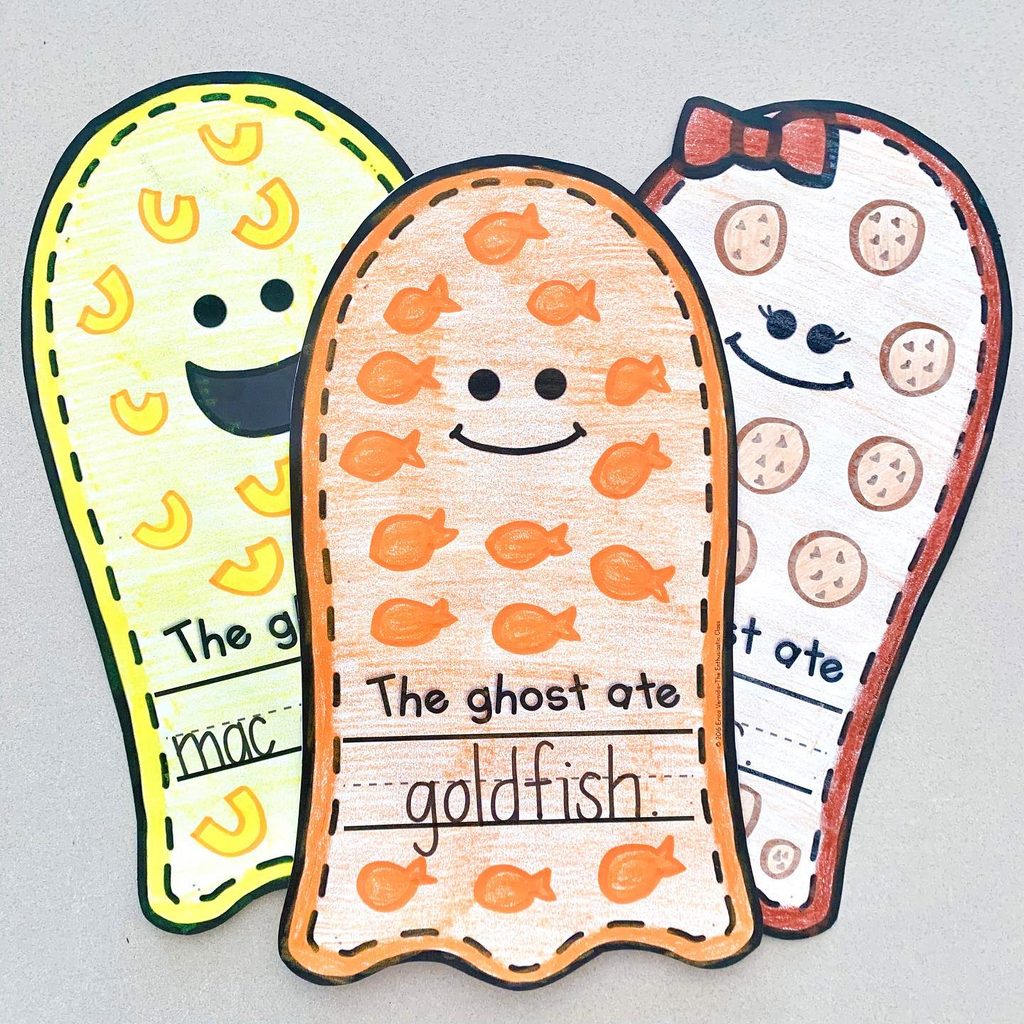
Photo: @kc_kindergarten from Instagram
This project pairs a coloring page with a sentence starter, so kids practice drawing, repeating patterns, and early writing in one sitting. It makes a sweet break between pumpkin projects while keeping the same cozy October feeling.
Ask each child to pick a favorite snack, draw it all over the ghost, and write or trace the word at the bottom. Pumpkin pie and pumpkin muffins are popular picks, and younger kids can say the word while you write it lightly for them to trace.
Teacher-made ghost templates often cost $3 to $5 for a bundle of Halloween crafts for kids, or you can sketch the shape on cardstock for free. Crayons and markers from home cover the rest.
Salt Painted Pumpkins That Pop on Black Paper
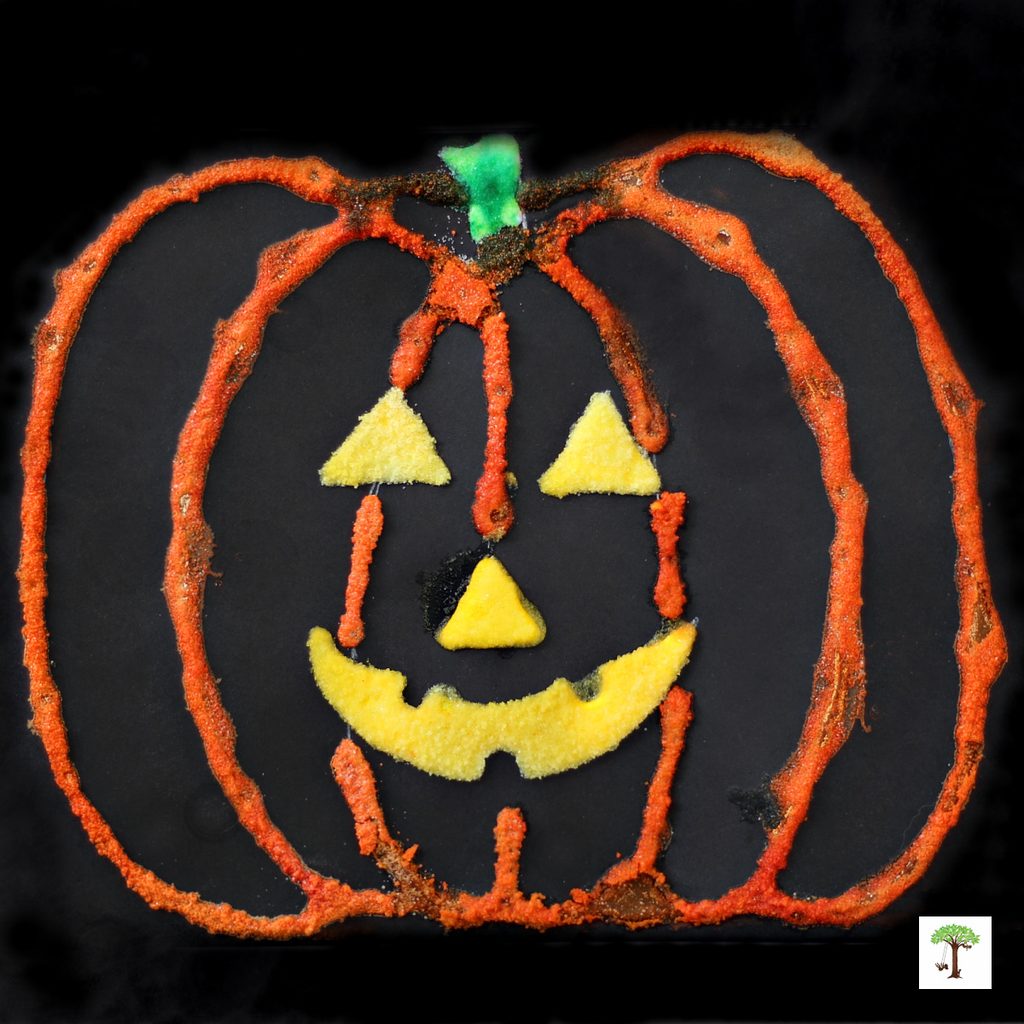
Photo: @rhythmsofplay from Instagram
Salt painting is part science and part art, because the salt soaks up watercolor and carries the color along the glue lines on its own. Kids get to watch orange creep through the pumpkin like magic, and the black background makes every raised line stand out.
Draw a pumpkin with white school glue, cover it in table salt, and tip off the extra. Touch a brush full of watercolor to the salt, then let it dry flat overnight since the glue stays wet for hours.
Table salt, school glue, and black construction paper cost less than $6 together. Liquid watercolors are around $10 for a set, though a few drops of food coloring in water works for almost nothing.
Wagon Wheel Pasta Pumpkins on Cardboard
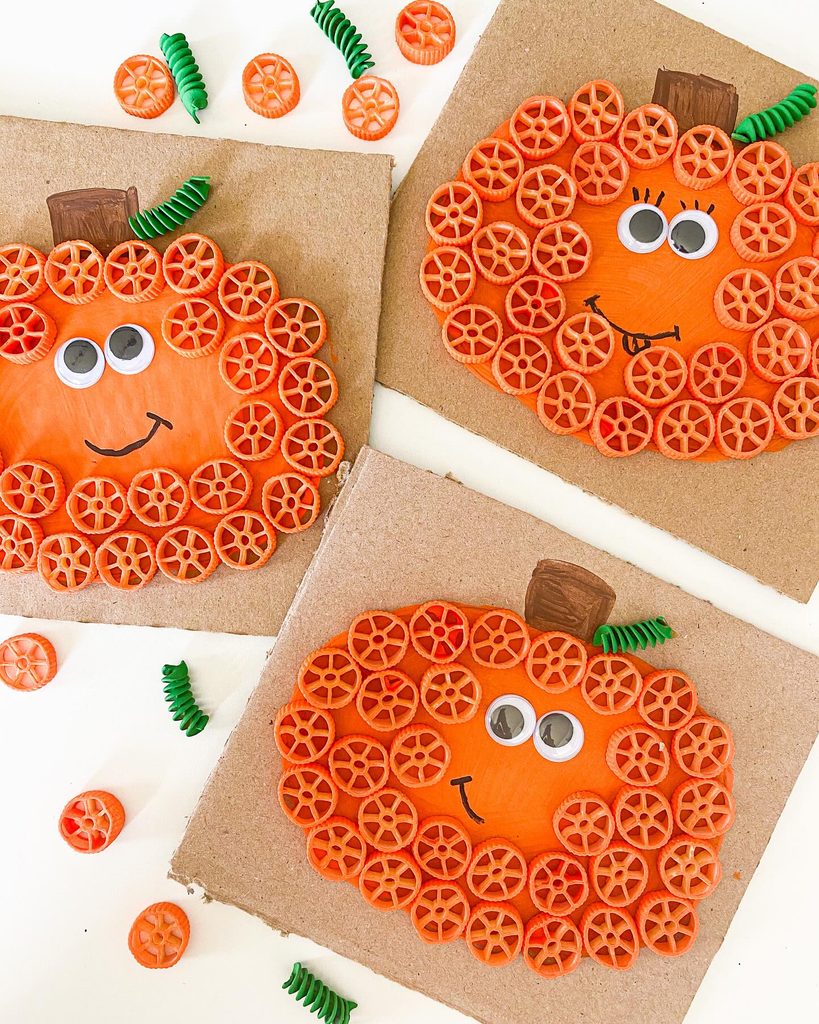
Photo: @abcdeelearning from Instagram
Wagon wheel pasta already looks like tiny pumpkin slices, so kids get a bold, raised result with very little effort. The round shapes invite counting too, which quietly slips a little math into your preschool pumpkin crafts.
Dye the pasta ahead by shaking it in a zip bag with a splash of vinegar and food coloring, then dry it on paper towels. Running little fingers through a bowl of colored noodles doubles as sensory play before the gluing even starts.
A box of wagon wheel pasta costs about $2, and cardboard from delivery boxes is free. Use tacky craft glue for this one, since a glue stick cannot hold the weight.
Pumpkin Characters Driving Cardboard Box Cars
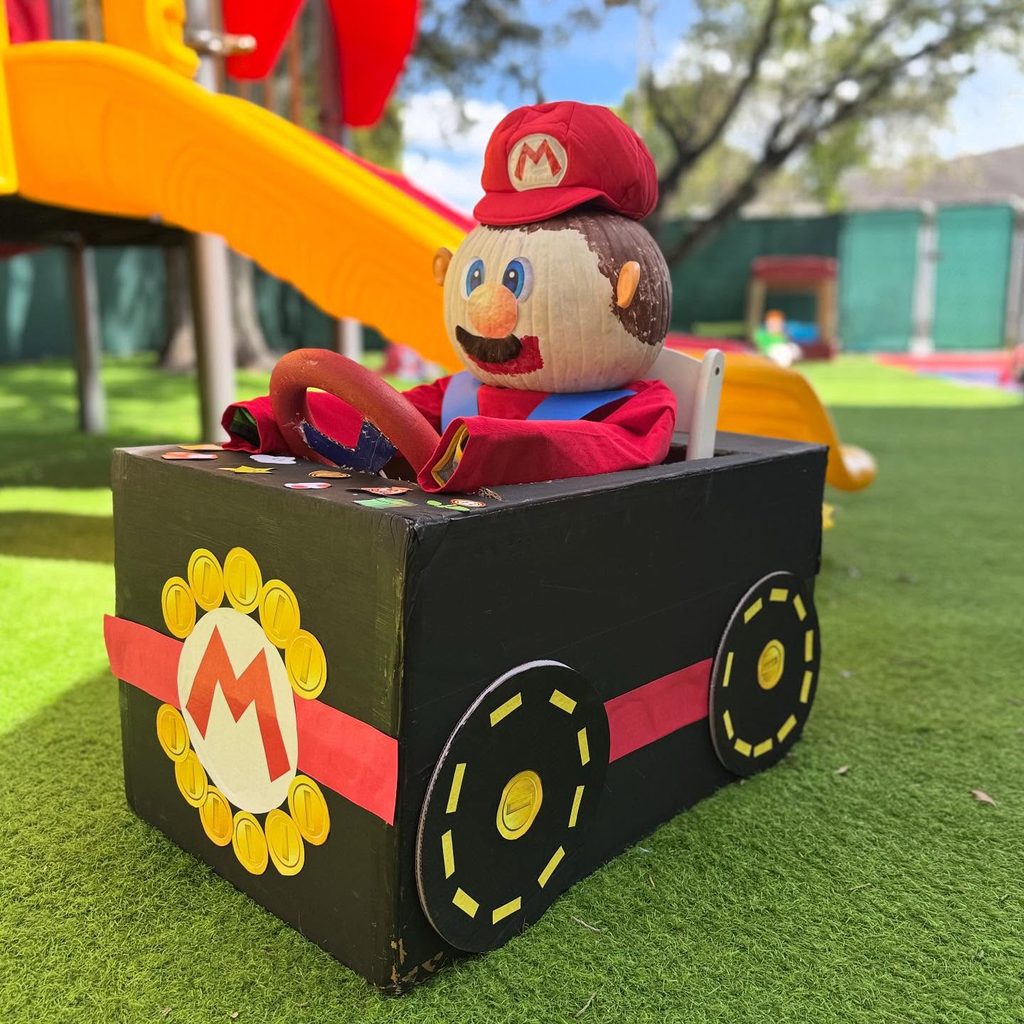
Photo: @davieacademy from Instagram
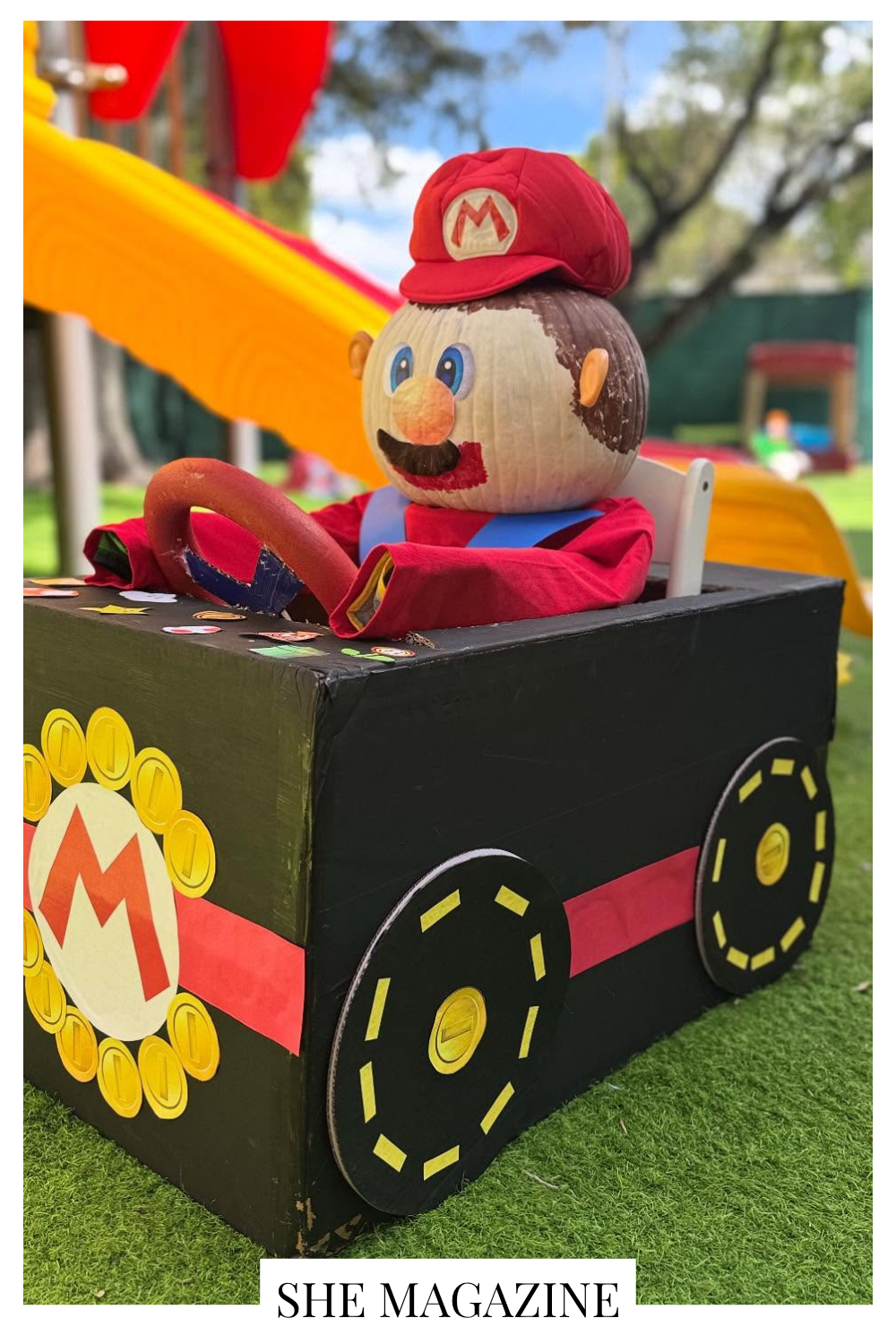
Many schools host pumpkin decorating contests, and turning a painted pumpkin into a favorite character behind the wheel always wins hearts. It becomes a family project where little ones choose the character and grown-ups handle the trickier building.
Paint a white pumpkin for the face, add a felt hat or a baby cap, and seat it inside a shoebox or diaper box painted black.
A white pumpkin costs about $5 to $8, and the box, plates, and paint are usually already at home. Borrowing a hat or shirt from the dress-up bin keeps the whole build under $15.
Bell Pepper Jack O Lanterns for the Littlest Carvers
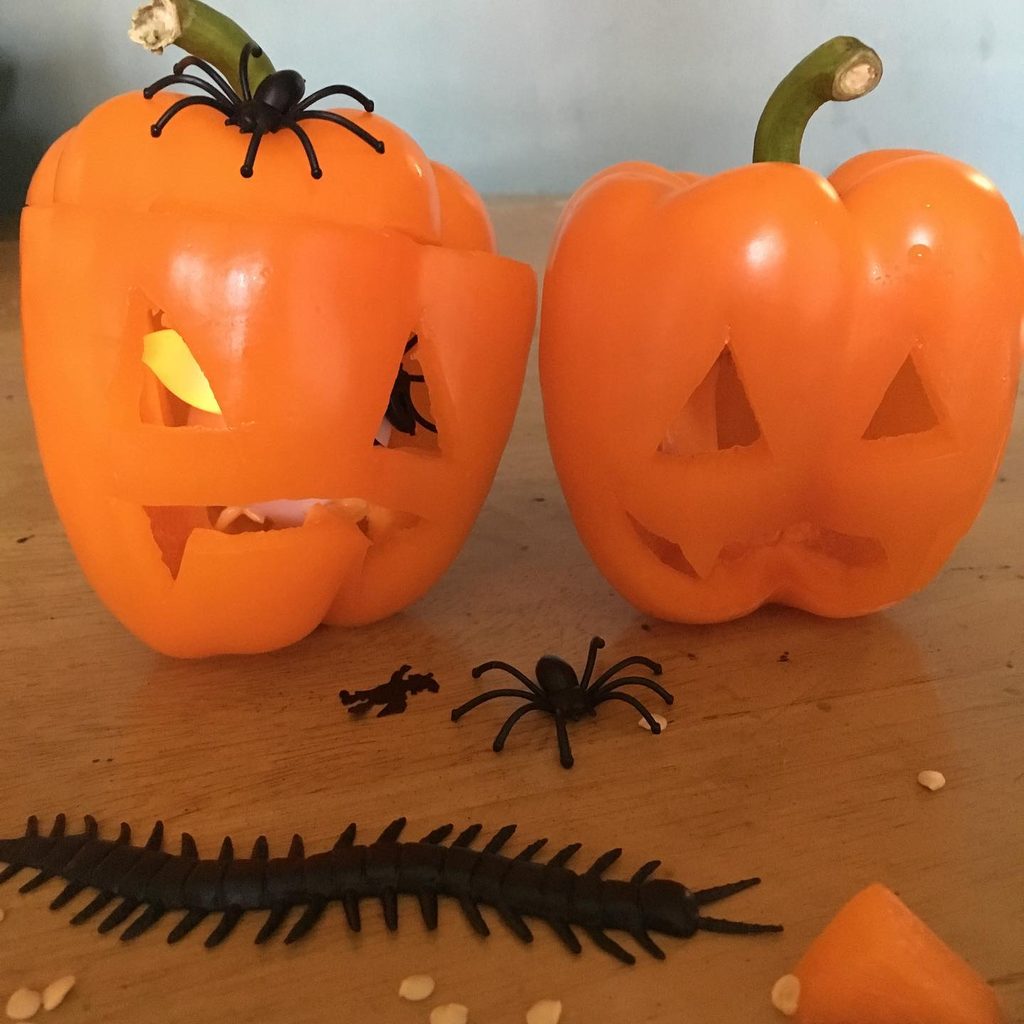
Photo: @lottie_makes from Instagram
Orange bell peppers have thin, soft walls that a child can help cut with a nylon kid-safe knife, so they get the full carving experience without a heavy pumpkin or sharp blade. The cut-out eyes and mouth are edible, which means the leftovers turn into snack time.
Slice off the top, scoop out the seeds, and draw the face with a marker before anyone starts cutting. A battery tea light and a plastic spider make these a cute table display for a day or two before the peppers soften.
Orange bell peppers usually run $1 to $2 each, and a kid-safe knife set costs around $10. Battery tea lights come in packs for about $5 and get reused every October.
Nobody at our table is keeping score, and the pumpkin with seven eyes and no mouth just got the best spot on the fridge. That is what these little projects are for: the sticky fingers, the giggles, and a proud small voice saying Look what I made.