
Get SHE’S Daily Newsletter | Subscribe Here

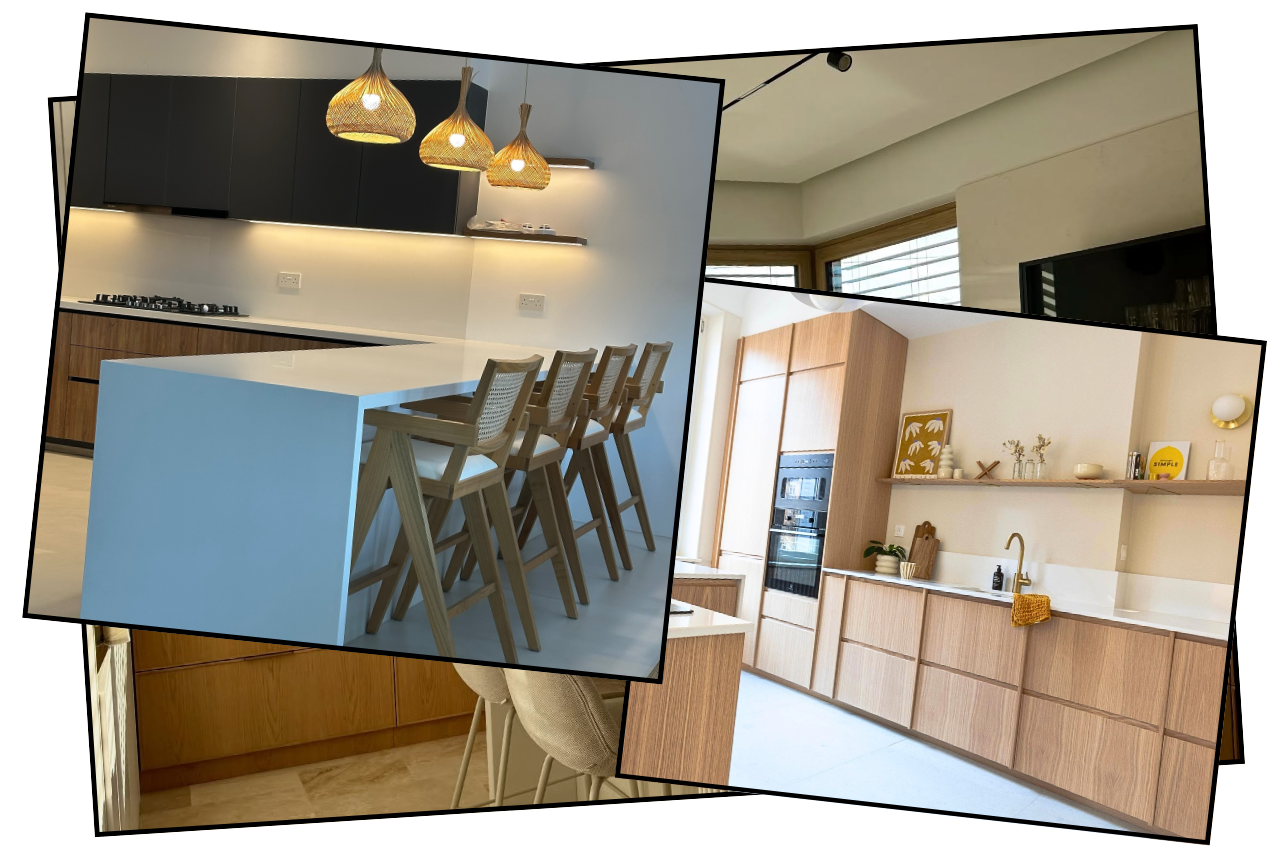
Japandi Kitchen Design Ideas That Instantly Calm a Busy Space
Disclaimer. Some images featured in this article may originate from third-party sources and are used for illustrative purposes. Please review our Image Credits Policy for attribution information.
I adore Japandi kitchen design, I loved the style and all about things about it.
I always think of a Japandi Kitchen have a calm, never cluttered in the whole room. It lives in the small, specific choices holding it together.
But I suggest you make sure that you make the right decision, as you will have many options here, and don’t worry, I make it a little bit easier by sharing some of the best Japandi kitchen design ideas I found online, for me, these are the simplest choices to start with.
If one of them stops your scroll the way it stopped me before, that is your sign to try it.
In this article
- Layered Open Shelves Bring Warmth to a Wood Kitchen
- A Sculptural Pendant Cluster Makes an Island Feel Considered
- The Japandi Material Cheat Sheet
- Corner Windows Turn a Plain Layout Into the Best Seat in the House
- Soft Taupe Cabinets Prove Neutral Does Not Mean Boring
- Sage Green Uppers Give a Japandi Kitchen Design a Quiet Personality
- Small Swap or Full Upgrade
- A Round Dining Table Softens a Sharp Kitchen Layout
- A Rustic Island Table Brings Farmhouse Calm Into a Japandi Kitchen Design
- Cone Pendants and Floating Shelves Create an Editorial Corner
- What Every Calm Kitchen Actually Has In Common
- She Notes
Layered Open Shelves Bring Warmth to a Wood Kitchen
A single floating shelf does more work in a kitchen than most people expect. It gives the eye a place to rest between the cabinets and the counter, and it softens what would otherwise feel like a wall of storage.
The trick is restraint, something Apartment Therapy has been saying about open shelving for years now. A small stack of books, one ceramic vase, and a plant with real texture will always read better than a shelf crowded with decor.
Pair the shelf with White Oak Kitchen Cabinets and the whole wall starts to feel intentional instead of decorated. The wood grain becomes the star, not the accessories sitting in front of it.
Leave a little negative space on either end. That empty stretch is what makes the styled section feel curated instead of cluttered.
A single oak shelf bracket set costs less than most cabinet hardware upgrades and takes an afternoon to install.
A Sculptural Pendant Cluster Makes an Island Feel Considered
Three pendants at slightly different heights over an island do something one central fixture never quite manages. They pull the eye across the whole counter instead of just the middle of it.
Woven or rattan shades add texture without adding color, which keeps the look grounded even in a kitchen with darker cabinetry underneath. Architectural Digest has covered this layered pendant approach as one of the easiest ways to upgrade an island without touching the cabinetry at all.
This idea works especially well when the island itself is a solid, quiet color.
Cane back barstools underneath echo the same woven texture from a lower angle. It ties the whole seating area back to the lighting without matching it exactly.
Try grouping the pendants slightly off center over the seating side of the island rather than dead center.
The Japandi Material Cheat Sheet
Wood tones do the heavy lifting, so keep them warm and low sheen rather than glossy or orange toned. Stone or travertine flooring adds texture without adding pattern, which keeps a small kitchen from feeling busy. Matte black or brass fixtures work best in small doses, one faucet or one pendant set is usually enough. Linen and woven textures on stools or shades soften hard cabinet lines without adding color. If a material catches light instead of absorbing it, it is probably working against the calm you are trying to build.
Corner Windows Turn a Plain Layout Into the Best Seat in the House
A kitchen with windows wrapping around a corner rarely needs much else to feel special. The light does most of the design work on its own throughout the day.
Placing the island so it faces that window turns prep time into something closer to a pause than a chore.
Warm wood cabinetry against pale stone flooring keeps a bright room from feeling cold or sterile. The travertine underfoot especially holds onto that same soft, sunlit tone.
Track lighting mounted in a simple geometric outline overhead adds structure without competing with the windows. It is a detail most people notice only after a second look.
If your layout allows it, keep the corner as open as possible. Resist the urge to fill every inch of counter near a good window.
Soft Taupe Cabinets Prove Neutral Does Not Mean Boring
Taupe and warm grey cabinetry sit in a strange, useful middle ground. They read as neutral in photos but feel far richer than white once you are standing in the room.
The color works particularly well paired with black matte fixtures and a single warm wood accent, as a floating shelf or a cutting board leaned against the backsplash. Better Homes & Gardens has named warm greige tones one of the more durable neutral trends precisely because they age more slowly than trend-driven whites.
This is a strong direction if you want a kitchen that photographs beautifully but still feels lived in day to day. Beige Kitchen Cabinets and taupe tones both share that same slow aging quality.
A single dried branch arrangement on an open shelf softens the matte cabinet finish instantly.
Keep hardware minimal or hidden entirely. The color itself is doing enough visual work without extra shine competing for attention.
Sage Green Uppers Give a Japandi Kitchen Design a Quiet Personality
I loved this idea a lot. Painting only the upper cabinets in a muted sage while keeping the lowers in natural wood creates a two tone effect. It is a smaller commitment than a full green kitchen.
The color works because it never competes with the wood tones underneath it. Martha Stewart has featured sage as one of the rare greens that reads as a neutral from across a room while still adding real depth up close.
Brass pendant lighting against sage cabinetry adds just enough warmth to keep the green from feeling cold or clinical.
A curved peninsula edge softens the transition between kitchen and living space, which matters even more in an open layout. Hard angles rarely feel as calm as rounded ones.
This palette suits a Minimalist Home especially well, since the green never fights for attention against the wood.
Small Swap or Full Upgrade
Open shelving: small swap, one bracket and a board can be done in an afternoon.
Layered pendant lighting: small swap if your wiring already supports multiple fixtures.
Two tone cabinet color: full upgrade, this usually means paint or refacing the uppers only.
Corner window placement: full upgrade, this is a layout decision best made before construction.
Freestanding island table: small swap, no renovation needed, just the right piece of furniture.
Layered pendant lighting: small swap if your wiring already supports multiple fixtures.
Two tone cabinet color: full upgrade, this usually means paint or refacing the uppers only.
Corner window placement: full upgrade, this is a layout decision best made before construction.
Freestanding island table: small swap, no renovation needed, just the right piece of furniture.
A Round Dining Table Softens a Sharp Kitchen Layout
A round table placed just off the kitchen island breaks up all the straight lines that tend to dominate a kitchen. It gives the eye somewhere soft to land after looking at cabinet edges and countertops all day.
Chevron patterned wood flooring underneath adds movement without adding clutter.
A sculptural chandelier overhead, even a playful one with rounded bulb shapes, keeps the space from feeling too serious. It signals that the room is meant for gathering, not just cooking.
Simple ceramic vases on the table do more visual work than a full centerpiece ever could. Two or three shapes grouped together are usually enough.
Wooden chairs with a slight curve in the backrest tie the round table shape back into the seating itself. It is a small repetition that most guests will feel before they consciously notice it.
A Rustic Island Table Brings Farmhouse Calm Into a Japandi Kitchen Design
A freestanding wood table used as an island instead of a built in unit gives a kitchen an unfinished, collected feeling in the best possible way.
This pairs surprisingly well with a dark, textured tile backsplash behind a professional range.
A marble slab set casually on top of the table, rather than built into it, adds a prep surface without losing the furniture-like feel. It can be moved or removed entirely depending on the day.
Open shelving built directly into the surrounding wood millwork keeps everyday tools within reach without needing upper cabinets at all. It is a detail borrowed more from Kitchen Essentials storage than traditional design.
A single low stool tucked under the table gives the whole setup a lived in, unplanned quality. Not every seat needs to match.
Cone Pendants and Floating Shelves Create an Editorial Corner
Three cone shaped pendants in a row over a long wood table create rhythm without needing a chandelier. The repetition is what makes the lighting feel designed rather than default.
Plaster finished walls behind the shelving add texture that paint alone rarely achieves.
Layered open shelving styled with a mix of books, small vases, and one unexpected object, like a piece of driftwood, keeps the wall from feeling like standard storage. It reads more like Organization with intention behind it.
Chairs with a rounded back and slatted wood detail soften what would otherwise be a very linear table setup. The curves matter more than people expect.
A low bowl of pinecones or dried botanicals on the table costs nothing and adds a seasonal touch without looking staged.
What Every Calm Kitchen Actually Has In Common
After pulling all of these ideas together, one pattern kept repeating across every single kitchen. None of them were trying to look expensive.
Every space leaned on natural materials doing quiet work together. Wood, stone, linen, and matte metal showed up far more often than anything glossy or loud.
Restraint mattered more than any single product. The kitchens that felt the calmest were the ones with the most empty space left on purpose.
She Notes
You do not need to overhaul your kitchen to feel the shift a Japandi approach brings. Pick one detail from this list, live with it for a few weeks, and notice how much it changes the way the room feels before you move on to the next one. Slow is part of the style.
A Japandi kitchen design is really just a series of small, unhurried decisions repeated until the whole room feels like it is breathing at the same pace.
I still have not finished my own kitchen. I am in no rush anymore, and honestly, that might be the most Japandi part of the whole thing.